LLMs16 min read
Meta Ads MCP Server Arrives in Databricks Marketplace
Databricks added Meta's ads MCP server to its marketplace for October 2026. Marketers can now use Genie to run campaigns directly with customer data.
From Databricks blog
90 days of the enterprise, pro and team plans free, no card needed. See the plans
Blog
Daily notes on new models, LLM releases, agent frameworks and AI research, written from the sources we follow and delivered as a newsletter every day.
Get the morning and evening issues
Every new post of the day, in one email. Confirmation required.
LLMs16 min read
Databricks added Meta's ads MCP server to its marketplace for October 2026. Marketers can now use Genie to run campaigns directly with customer data.
From Databricks blog
Agents6 min read
Zhipu AI released GLM 5.3, a massive 753B-parameter model, on Amazon Bedrock today.
From AWS machine learning blog
Photo: Yan Krukau
OpenAI solved the Navier-Stokes problem using internal agents but faced accusations of unethical data use and rushed announcements.
From The Verge AI
Agents9 min read
AWS released a new skill that turns coding agents into SageMaker inference experts. Engineers can now generate executable code to benchmark models and optimize deployments.
From AWS machine learning blog
LLMs1 min read
Today, we’re launching a new Databricks AI Function ai_decide that makes fast decisions...
From Databricks blog
Agents2 min read
Amazon Bedrock now supports in-country inferencing for Anthropic’s Claude models in India, enabling local data processing and improved performance.
From AWS machine learning blog
Agents2 min read
Amazon Bedrock now offers in-region inference for Anthropic Claude models in Seoul and Singapore. This keeps data within the Region for strict residency needs.
From AWS machine learning blog
Agents2 min read
GPT-6.1 Sol is now generally available on Amazon Bedrock. It offers stronger reasoning for coding, documents, and workflows at lower cost.
From AWS machine learning blog
Agents1 min read
xAI's Grok 4.7 is now available on Amazon Bedrock: a frontier model for coding, long-running agents, and knowledge work. It offers a 500K token context window and four configurable reasoning effort levels, reachable through the Responses...
From AWS machine learning blog
Agents2 min read
Claude Sonnet 5.5 is available on Amazon Bedrock and Claude Platform on AWS. It offers better efficiency for coding and knowledge work.
From AWS machine learning blog
Agents1 min read
GPT-6 Sol and GPT-6 Luna are now generally available on Amazon Bedrock, giving you more options to match intelligence and efficiency to each workload.
From AWS machine learning blog
Agents1 min read
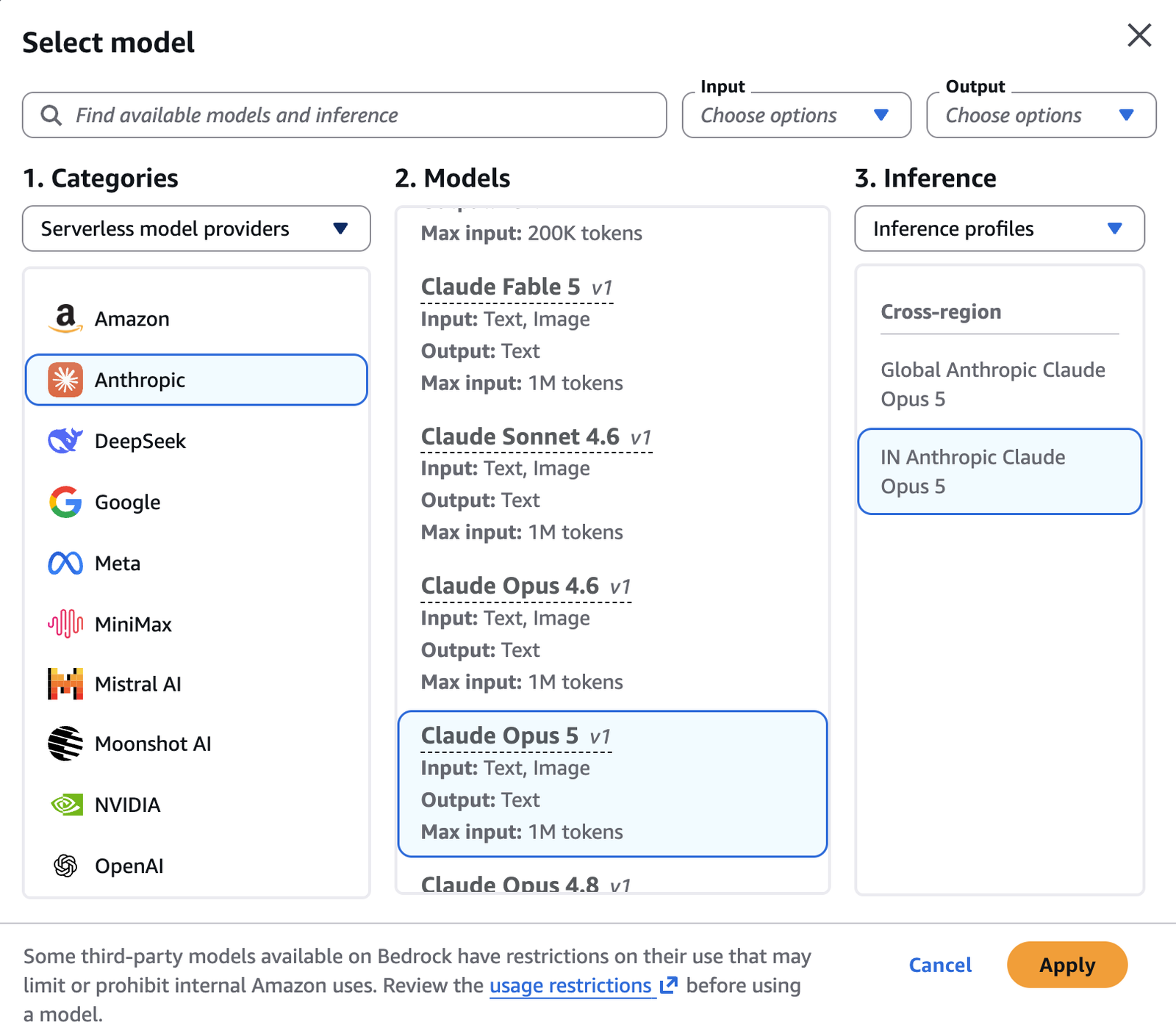
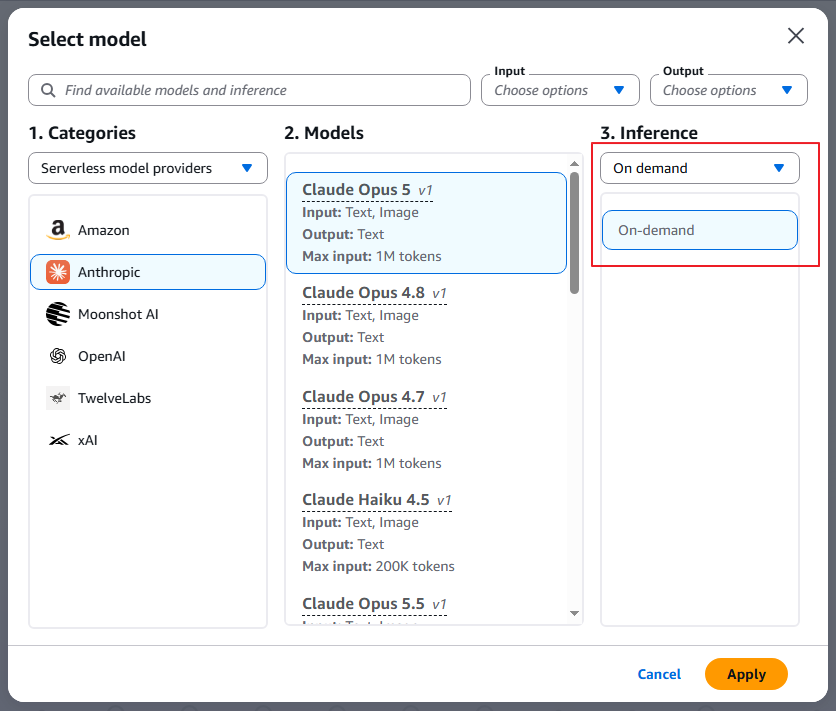
Claude Opus 5.5, Anthropic's most capable Opus model for agentic coding, knowledge work, and long-running tasks, is now available on Amazon Bedrock and Claude Platform on AWS. This post covers what's new in Opus 5.5, practical guidance, ...
From AWS machine learning blog
Agents1 min read
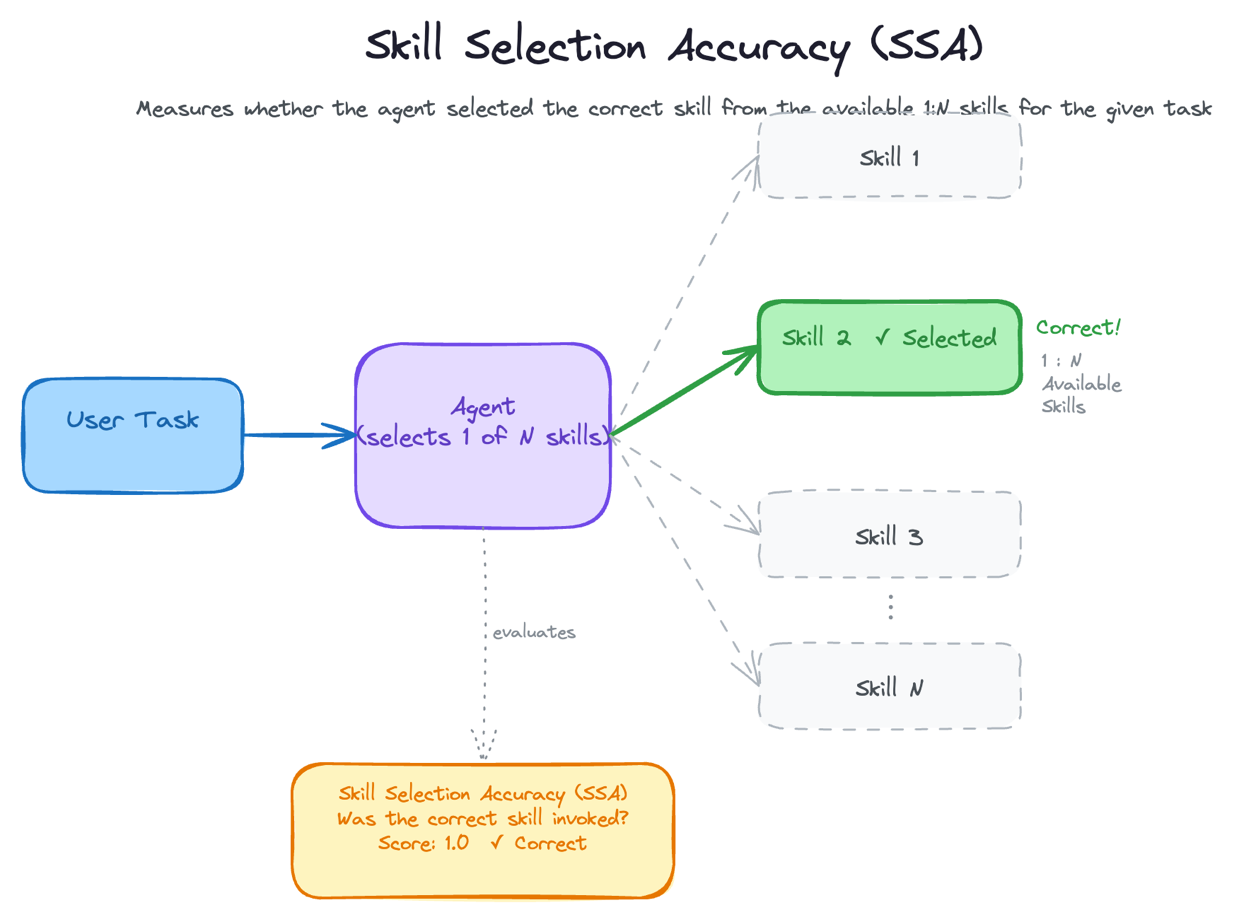
Skills let you encode domain-specific procedures as reusable, portable instructions for agents, but a fluent answer doesn't prove the agent picked the right skill or followed it. Learn how to measure skill selection and instruction follo...
From AWS machine learning blog
Agents1 min read
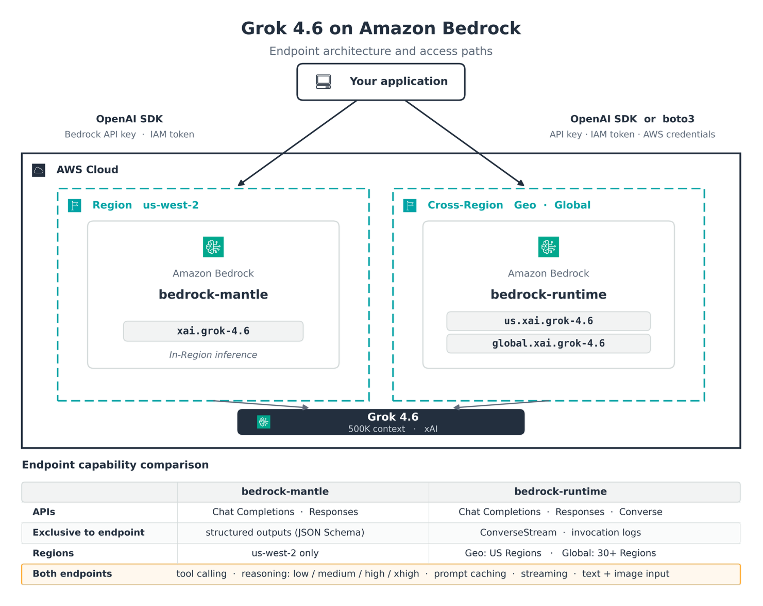
xAI's Grok 4.6 is now available in Amazon Bedrock: a frontier model for long-running agents, coding, and knowledge work, with a 500K token context window and four reasoning effort levels. It runs on both the bedrock-mantle and bedrock-ru...
From AWS machine learning blog
Agents1 min read
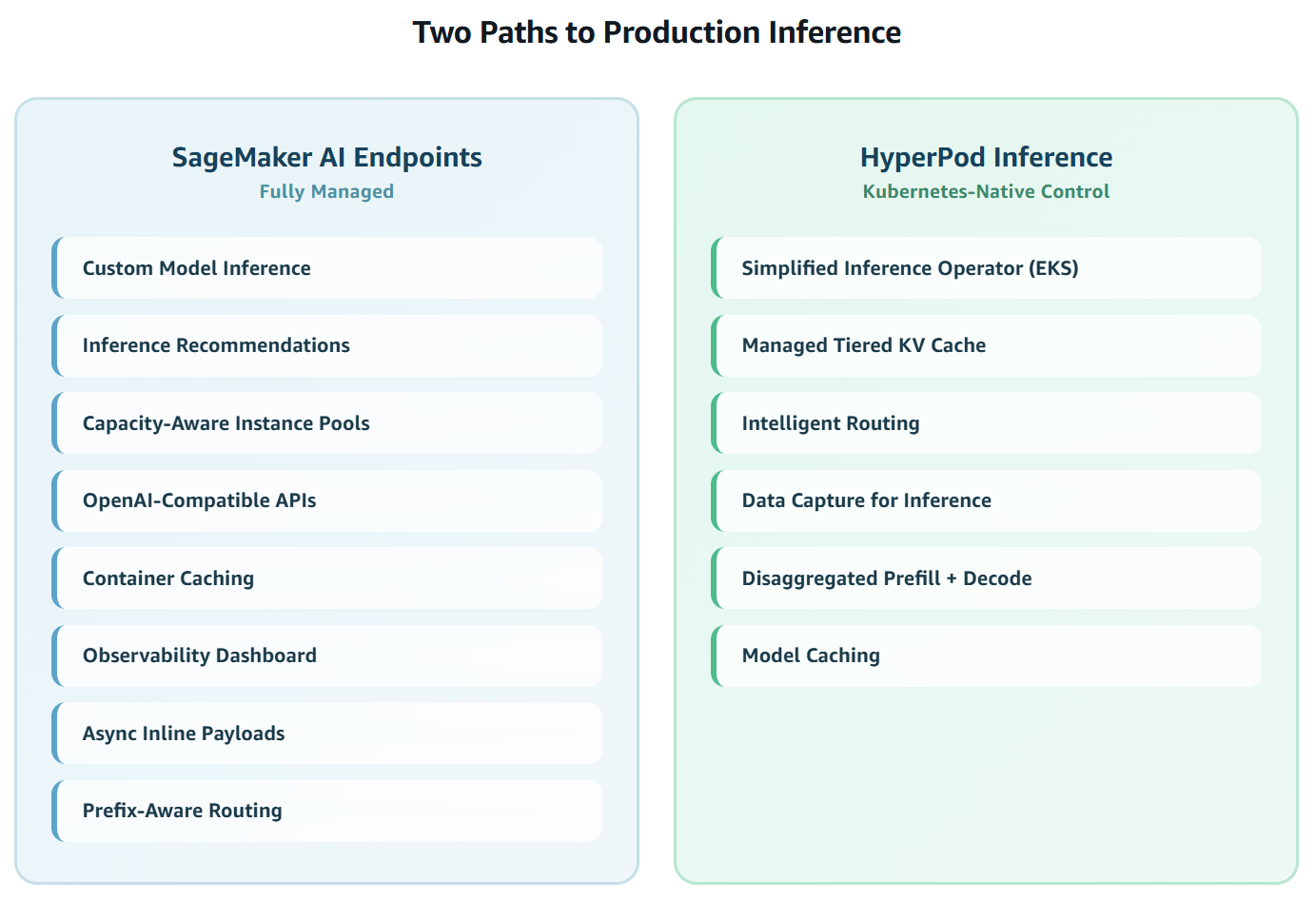
Amazon SageMaker AI shipped 13 inference launches in year-to-date across two deployment paths: fully managed endpoints and Amazon SageMaker HyperPod Inference. This post reviews each launch, from inference recommendations and capacity-aw...
From AWS machine learning blog
Agents2 min read
Moonshot AI launched Kimi K3 on Amazon Bedrock as its largest open model.
From AWS machine learning blog
Agents1 min read
Amazon Bedrock released a new AgentCore runtime to improve speed and cost efficiency.
From AWS machine learning blog
Agents1 min read
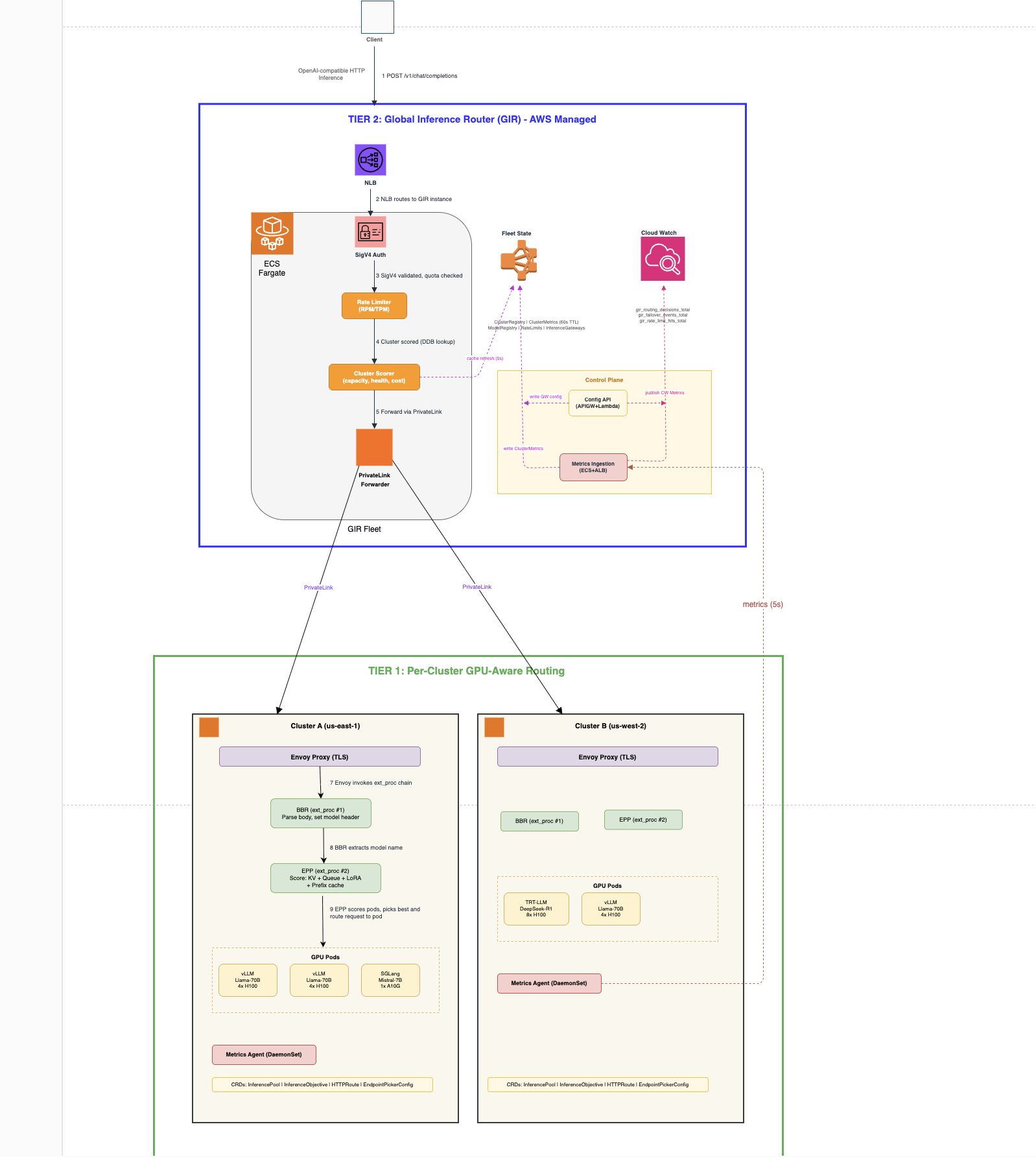
Amazon SageMaker HyperPod Inference Gateway is a Kubernetes-native, GPU-aware routing add-on for Amazon EKS. It uses real-time GPU signals to send each inference request to the best-suited pod, cutting first-token latency by up to 82% wi...
From AWS machine learning blog
Agents1 min read
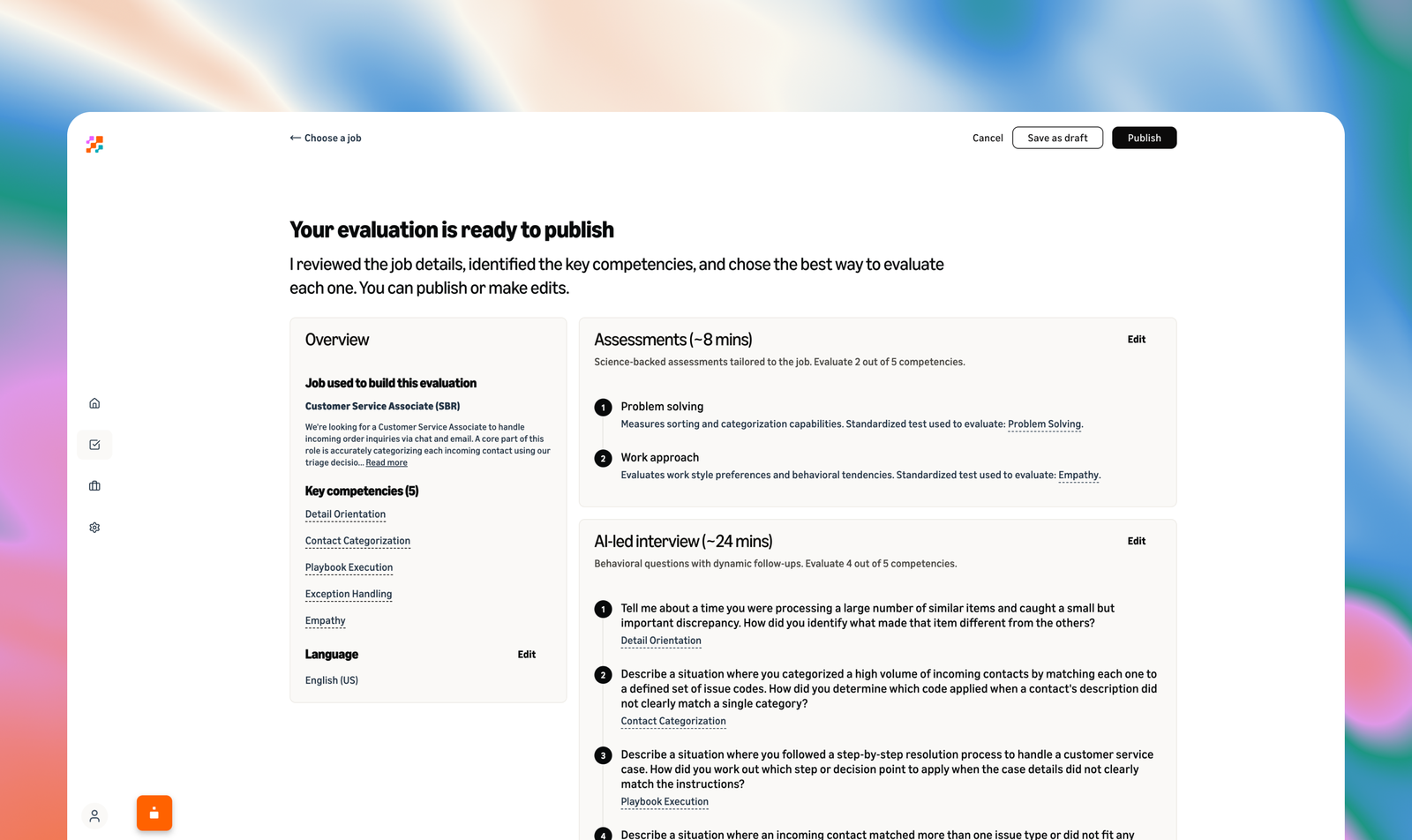
Amazon released an AI hiring platform called Amazon Connect Talent. It uses AI agents to screen and interview candidates at scale.
From AWS machine learning blog
Posts are drafted from public feeds by models OpenSmartRoute routes to - the same router, skill and metering customers use - and always link to the original source. Corrections: support.
Archive (100)