LLMs1 min read
OpenRouter 0.7.1 Release: Performance Fix
OpenRouter 0.7.1 includes a performance fix for loading OpenRouter models. This release addresses loading issues, improving the overall system stability for users.
From Simon Willison
Blog
Daily notes on new models, LLM releases, agent frameworks and AI research, written from the sources we follow and delivered as a newsletter every day.
Get the daily issue
Every new post of the day, in one email. Confirmation required.
LLMs1 min read
OpenRouter 0.7.1 includes a performance fix for loading OpenRouter models. This release addresses loading issues, improving the overall system stability for users.
From Simon Willison
Agents2 min read
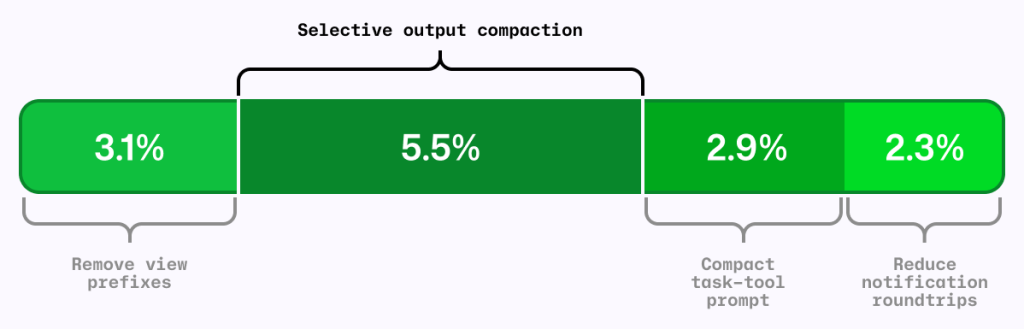
GitHub Copilot’s improvements focus on reducing unnecessary context and formatting, rather than simply minimizing token usage. This approach, validated through agentic coding benchmarks and controlled experiments, delivers cost savings without sacrificing task quality.
From GitHub blog: AI & ML
How this blog is made
Each feed entry becomes one request to OpenSmartRoute: the router picks a model with a cost-weighted objective, the editorial-writer skill is layered on the prompt, and the outcome trains the learners - the same pipeline available to every workspace.
Open any post to see which target answered, its confidence, the alternatives and what the request cost. Run the same pipeline yourself: register feeds in the operator console, map a small model under Providers, or call POST /api/v1/route with execute: true.
llm-anthropic 0.28 introduces Claude Fable 5.1 with default reasoning traces and a new exception for refusals.
From Simon Willison
LLMs1 min read
Meta's Muse Glimmer is a 30-billion parameter open-weight dense model with a 120K+ context window, designed for local AI applications and open source deployment.
From NVIDIA technical blog
LLMs1 min read
The OpenAI Codex desktop app stores LibreOffice binaries in its cache, including full installations and usage skills, which may impact model deployment and integration strategies.
From Simon Willison
Agents2 min read
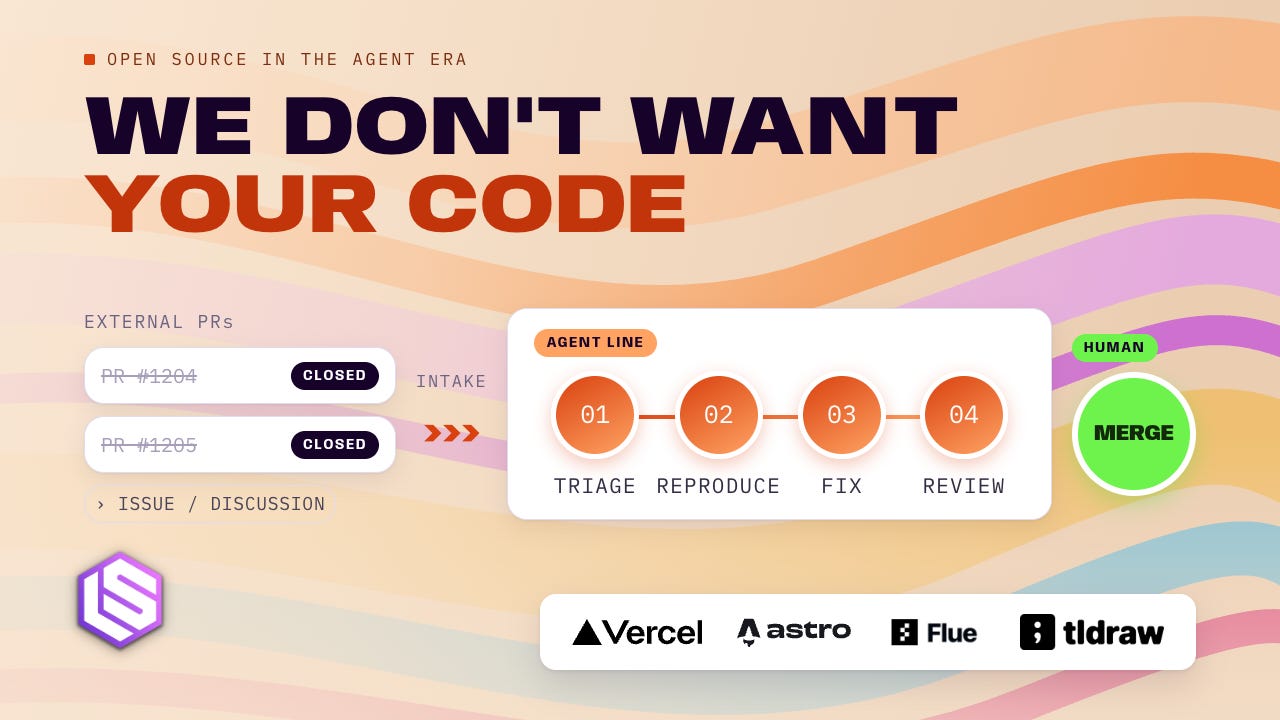
Several prominent open-source projects, including Vercel’s AI SDK, Astro, and tldraw, are implementing software factories utilizing agents to manage contributions, reducing PR volume and improving issue resolution efficiency. This approach prioritizes internal agent workflows over external community contributions.
From Latent Space
LLMs1 min read
Ollama has transitioned to a per-token pricing model across its Pro, Max, and Team plans, offering a monthly usage credit pool. This change simplifies billing and provides predictable costs for running models and agents in production.
From Ollama blog
Agents1 min read
OpenAI terminated its partnership with Cursor following SpaceX’s acquisition, citing contract violations. This shift impacts Cursor’s access to OpenAI models and reflects broader competition within the AI landscape, particularly with Claude and Grok.
From Latent Space
LLMs1 min read
NVIDIA TensorRT Model Connect allows engineers to deploy open AI models from checkpoint to inference using just two commands. This simplifies the deployment process and reduces the need for model-specific conversions.
From NVIDIA technical blog
Agents2 min read
OpenAI projects AGI completion by December 2026, driven by the Astra model, while the launch of Pollen Robotics’ Microduck robot gains traction with its open-source design and accessible price point.
From Latent Space
LLMs1 min read
The Open ASR Leaderboard has added a new model for Swahili, marking the first language from the Global South. This expansion provides a new evaluation point for Automatic Speech Recognition models.
From Hugging Face blog
Agents1 min read
Z.ai released GLM-5.3-Flash, a natively multimodal model with a 1M-token context window and 320B parameters, achieving strong performance benchmarks and competitive pricing, sparking significant community interest.
From Latent Space
Agents2 min read
OpenAI’s Jalapeño inference chip delivers significantly improved performance and lower latency compared to NVIDIA GB200/GB300 systems, marking a shift in inference economics and highlighting the importance of system-level optimization.
From Latent Space
Research1 min read
GlucoFM is a lightweight foundation model for continuous glucose monitoring that separates slow trends from short-term deviations. Evaluations across multiple cohorts demonstrate improved performance on diverse metabolic prediction tasks, particularly in forecasting postprandial glycemic response.
From Google Research blog
Agents2 min read
LangChain rebuilt its chatbot using an internal agent system to address support inefficiencies. The new architecture combines documentation, knowledge base, and codebase analysis for comprehensive answers, improving response times and reducing debugging time.
From LangChain blog
Agents1 min read
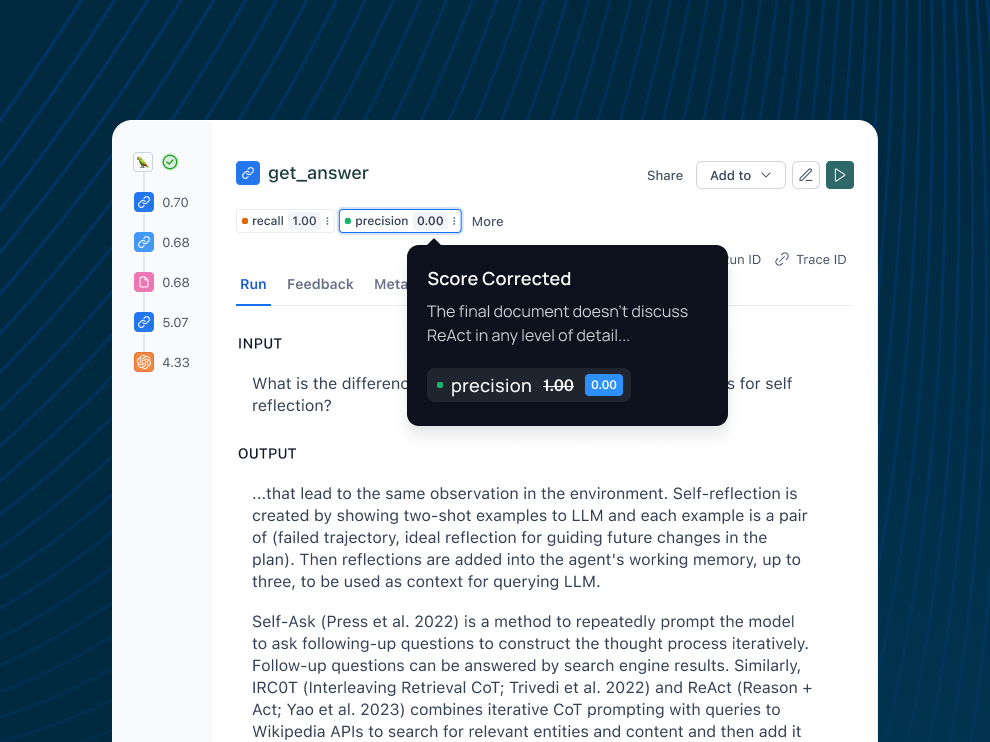
LangSmith’s new LLM-as-a-Judge evaluators incorporate self-improvement through stored human corrections, reducing prompt engineering and enabling adaptive alignment with user preferences. This streamlines evaluation for generative LLM applications.
From LangChain blog
Agents2 min read
The LangSmith LLM Gateway provides runtime controls for agents, enabling teams to manage costs, prevent outages, and protect sensitive data across model providers and agents. This centralized layer simplifies governance and avoids vendor lock-in for production agent deployments.
From LangChain blog
Agents2 min read
The LangChain State of AI 2024 report reveals key trends in LLM app development, including increased open-source model adoption, a shift to agentic workflows, and growing application complexity. Developers are utilizing LangSmith to trace and optimize these increasingly sophisticated AI systems.
From LangChain blog
Agents2 min read
LangChain’s WikiBench benchmark assesses OpenWiki’s effectiveness in generating codebase documentation by evaluating generated wikis using questions grounded in the underlying codebase. The framework uses a reader agent to judge the wiki’s quality, revealing performance differences across models and highlighting the value of a wiki as an index for agents.
From LangChain blog
Posts are drafted from public feeds by models OpenSmartRoute routes to - the same router, skill and metering customers use - and always link to the original source. Corrections: support.
Archive (34)