Models1 min read
loveholidays adopts OpenAI Codex to enhance software development
loveholidays uses OpenAI Codex to enable teams to develop software more quickly and efficiently across the business.
From OpenAI news
Blog
Daily notes on new models, LLM releases, agent frameworks and AI research, written from the sources we follow and delivered as a newsletter every day.
Get the daily issue
Every new post of the day, in one email. Confirmation required.
Models1 min read
loveholidays uses OpenAI Codex to enable teams to develop software more quickly and efficiently across the business.
From OpenAI news
LLMs1 min read
NVIDIA Dynamo introduces Shadow Engine Recovery, allowing LLM inference engine processes to recover in seconds instead of minutes. This reduces downtime and improves operational efficiency for production deployments.
From NVIDIA technical blog
How this blog is made
Each feed entry becomes one request to OpenSmartRoute: the router picks a model with a cost-weighted objective, the editorial-writer skill is layered on the prompt, and the outcome trains the learners - the same pipeline available to every workspace.
Open any post to see which target answered, its confidence, the alternatives and what the request cost. Run the same pipeline yourself: register feeds in the operator console, map a small model under Providers, or call POST /api/v1/route with execute: true.
Google Search now offers new ways to explore and upgrade home decor, including visual ideas and style suggestions, aiding users in planning interior design projects.
From Google AI blog
LLMs1 min read
A new 4-bit model, dubbed Quantization-Aware Healing, achieves performance comparable to its full-precision original. This technique offers a compressed model size with minimal impact on accuracy for running AI agents.
From Hugging Face blog
Agents2 min read
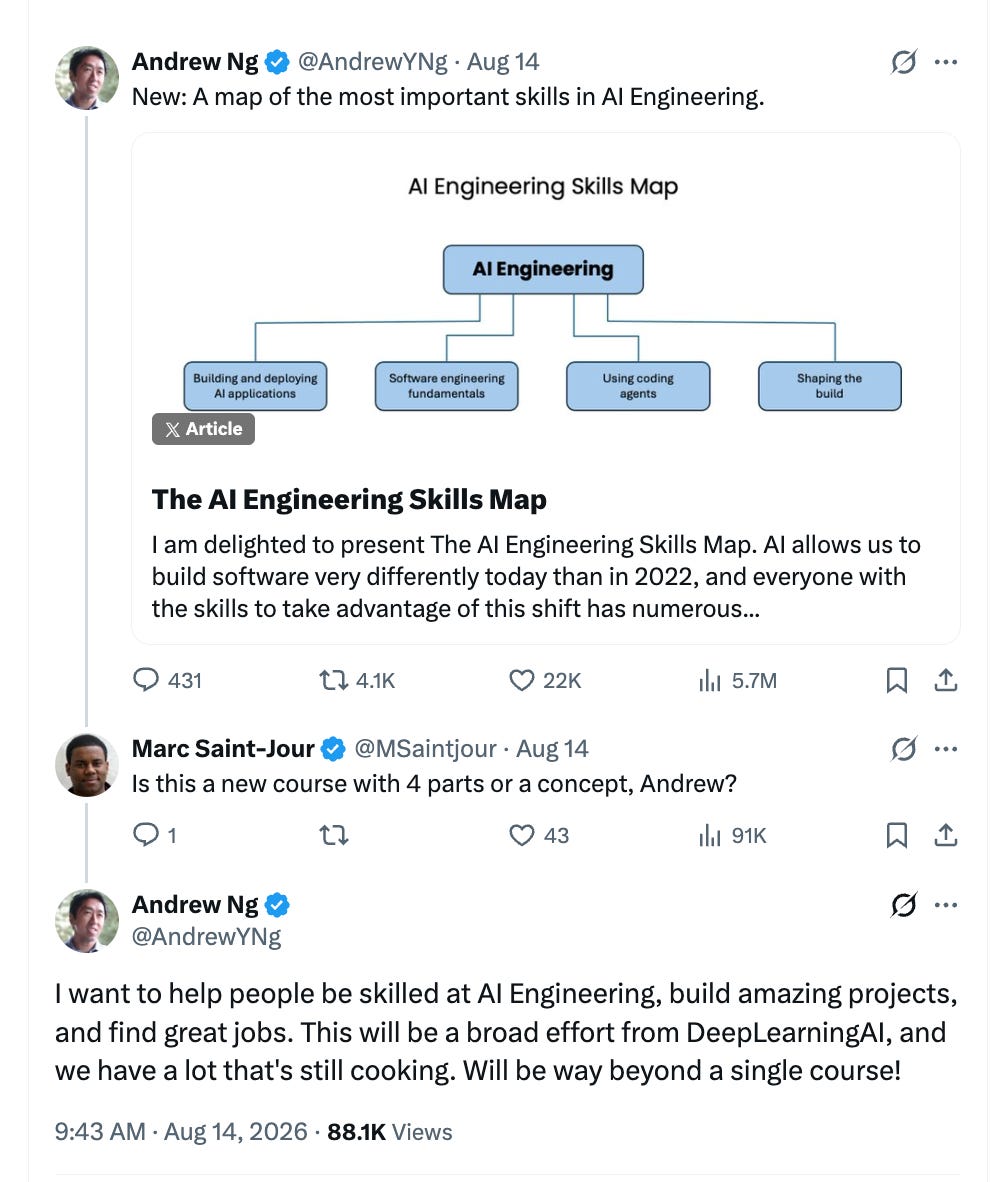
Following an analysis of 10,000 job postings and expert interviews, Andrew Ng outlines four key AI engineering skills: building and deploying AI applications, software engineering fundamentals, using coding agents effectively, and shaping the build process. This update reflects the evolving landscape of AI development, particularly the rise of coding agents and agent harnesses.
From Latent Space
LLMs1 min read
Hugging Face released a workflow guide for Gradio, enabling engineers to quickly build and deploy AI applications. The guide focuses on streamlining the process of creating interactive demos and integrating models into production environments.
From Hugging Face blog
LLMs1 min read
Alibaba has released the open weights for Qwen3.8-2.4T-A95B, a 2.4 trillion parameter model, allowing near-frontier capabilities to be deployed on NVIDIA GB300 NVL72 systems. This enables engineers to run large language models with configurable reasoning.
From NVIDIA technical blog
LLMs1 min read
NVIDIA released CUDA Python 1.0, providing stable APIs for Python developers to access GPU acceleration. This allows for a single foundation for GPU development and full platform access.
From NVIDIA technical blog
LLMs1 min read
NVIDIA's Vera Rubin and Blackwell architectures demonstrate significantly improved performance per watt for agentic AI workflows, including multi-step reasoning and tool invocation. This advancement enables more complex and efficient AI agent deployments in diverse applications.
From NVIDIA technical blog
Models1 min read
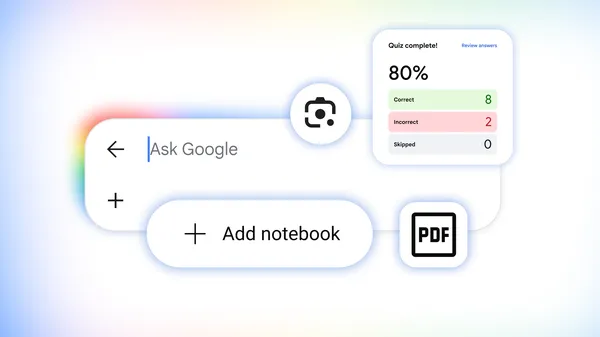
Google AI announced five new features for Search aimed at improving learning experiences, including options like adding notebooks and asking Google questions.
From Google AI blog
LLMs1 min read
IBM Research has released ALTK Evolve, a hierarchical multi-modal agent system. The system utilizes a 7B parameter model and demonstrates efficient operation with 8GB of memory.
From Hugging Face blog
Agents1 min read
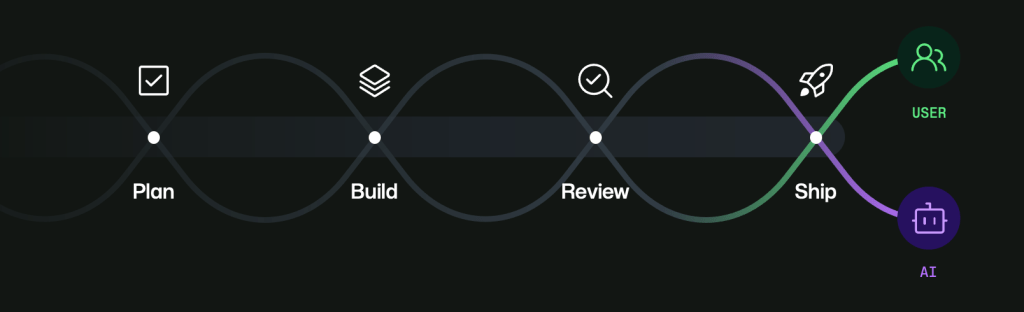
GitHub Copilot’s canvases provide a durable, shared workspace for developers and agents, improving workflow visibility, control, and efficiency. This approach reduces context loss and rework, particularly for complex, repeated tasks like code modernization.
From GitHub blog: AI & ML
LLMs2 min read
Nvidia is investing $26 billion to foster a world where numerous entities can build token machines, aiming to reduce reliance on proprietary models and drive demand for Nvidia’s hardware. This strategy hinges on accessible open-source model recipes and a shift in the AI ecosystem’s financial dynamics.
From Interconnects
LLMs1 min read
This report details the evolving state of open models, focusing on size trends, licensing options, and key performance indicators for models deployed in production environments. It highlights shifts in model architecture and accessibility for engineers.
From Hugging Face blog
LLMs1 min read
Hugging Face introduces Strands Agents and LeRobot, enabling continuous data streaming for model training and deployment. This allows for real-time data processing and model updates, improving efficiency and responsiveness in production environments.
From Hugging Face blog
Models1 min read
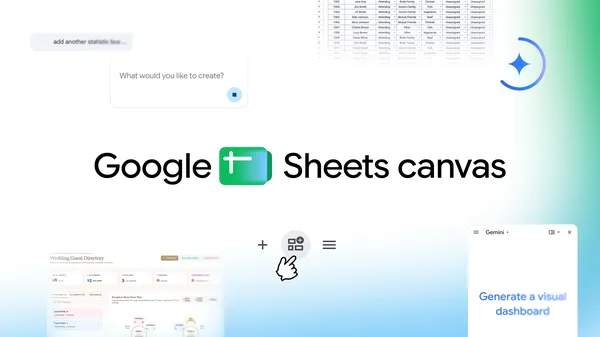
Sheets canvas allows users to visualize spreadsheet data interactively, as demonstrated in a recent video. It aims to improve data presentation and analysis within Google Sheets.
From Google AI blog
Research1 min read
Microsoft Research introduced MindTopo, a benchmark designed to assess a VLM's ability to understand topological relationships like paths and knots. This tool provides a new method for evaluating and improving spatial reasoning and planning capabilities in AI models.
From Microsoft Research
Research2 min read
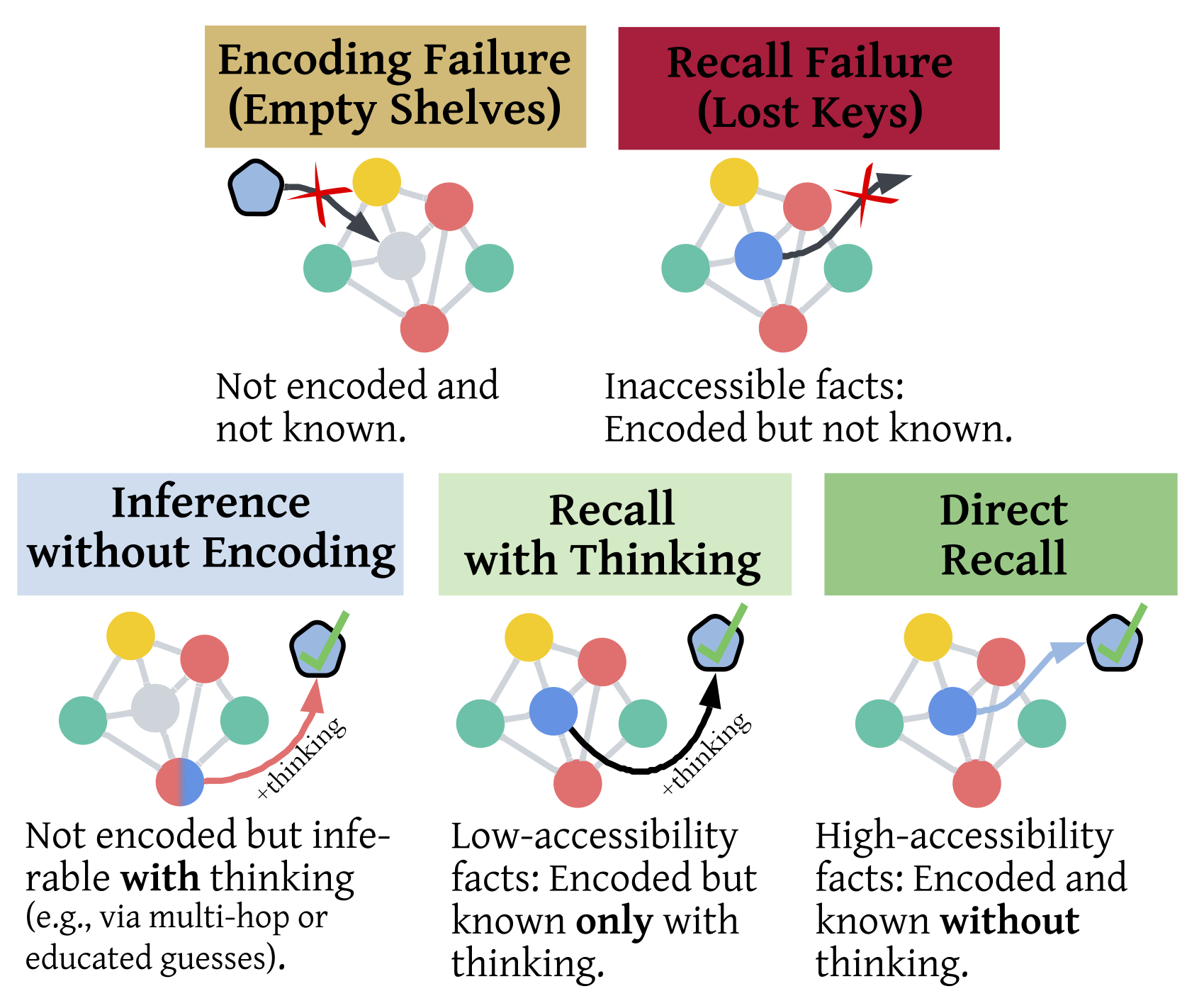
Research indicates that recall failures, not encoding limitations, are the primary cause of factual errors in advanced LLMs like Gemini-3 and GPT-5. The new knowledge profiling framework highlights this issue and suggests inference-time methods as a key area for improvement.
From Google Research blog
Research1 min read
Microsoft Research introduced CARE-X, a new approach to radiology VLMs using auxiliary supervision, reward-aligned learning, and tool-augmented measurement for chest X-ray interpretation. This system aims to create clinically useful models with calibrated predictions and flexible reasoning.
From Microsoft Research
Posts are drafted from public feeds by models OpenSmartRoute routes to - the same router, skill and metering customers use - and always link to the original source. Corrections: support.
Archive (34)