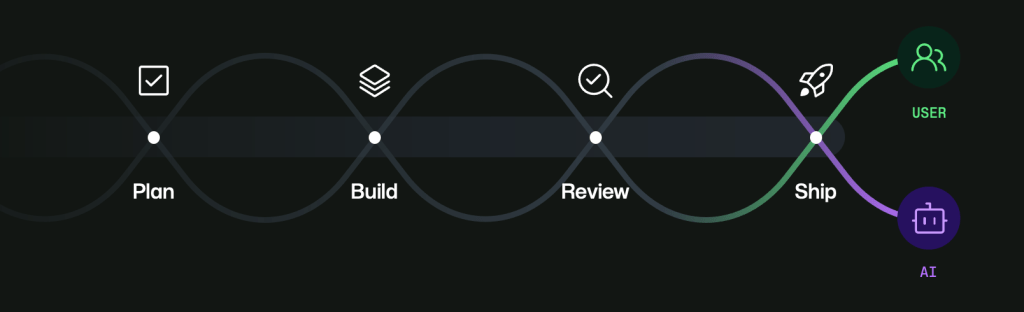
The GitHub Copilot team introduced canvases, a new feature designed to improve the management of agent-driven workflows. These canvases offer a persistent, shared surface for developers and agents to interact with, moving beyond the limitations of chat-based interactions. The core challenge addressed is the difficulty of tracking and auditing complex processes when agents generate changes rapidly. Without a central, durable view, it becomes challenging to maintain context and ensure alignment across the team.
The initial implementation, the Java Modernization Studio, demonstrates the value of this approach. This canvas allows teams to manage the entire process of Java modernization – from initial assessment to migration tasks and validation – with explicit visibility into each stage. The studio’s design minimizes the ‘coordination tax’ by providing a clear, inspectable record of the workflow’s state. The project utilized approximately 2,000 AI credits.
Another example, Site Studio, targets content creation and management workflows. Similar to the Java Modernization Studio, it addresses the challenges of iterative edits, review loops, and status transitions inherent in content-heavy projects. This canvas utilizes approximately 3,000 AI credits. The key design principle is to persist progress and drafts immediately, shifting the interaction model from prompt-by-prompt to a durable collaborative workflow. This allows agents to continue execution while humans can steer and approve without losing context.
The canvases are designed to reduce costs in the long run. By minimizing repeated prompting, reducing context loss, and decreasing rework, they offer a significant return on investment, particularly for frequently repeated workflows. The team emphasizes that this is an investment in better workflow architecture, not simply a cosmetic improvement. The team is encouraging users to experiment with the /create-canvas command to build and share their own canvases.