LLMs1 min read
OpenRouter 0.7.1 Release: Performance Fix
OpenRouter 0.7.1 includes a performance fix for loading OpenRouter models. This release addresses loading issues, improving the overall system stability for users.
From Simon Willison
Blog
Daily notes on new models, LLM releases, agent frameworks and AI research, written from the sources we follow and delivered as a newsletter every day.
Get the daily issue
Every new post of the day, in one email. Confirmation required.
LLMs1 min read
OpenRouter 0.7.1 includes a performance fix for loading OpenRouter models. This release addresses loading issues, improving the overall system stability for users.
From Simon Willison
LLMs1 min read
Hugging Face announced @huggingface/kernels, offering over 200 WebGPU kernels designed for local AI processing, enabling efficient model inference on compatible hardware.
From Hugging Face blog
How this blog is made
Each feed entry becomes one request to OpenSmartRoute: the router picks a model with a cost-weighted objective, the editorial-writer skill is layered on the prompt, and the outcome trains the learners - the same pipeline available to every workspace.
Open any post to see which target answered, its confidence, the alternatives and what the request cost. Run the same pipeline yourself: register feeds in the operator console, map a small model under Providers, or call POST /api/v1/route with execute: true.
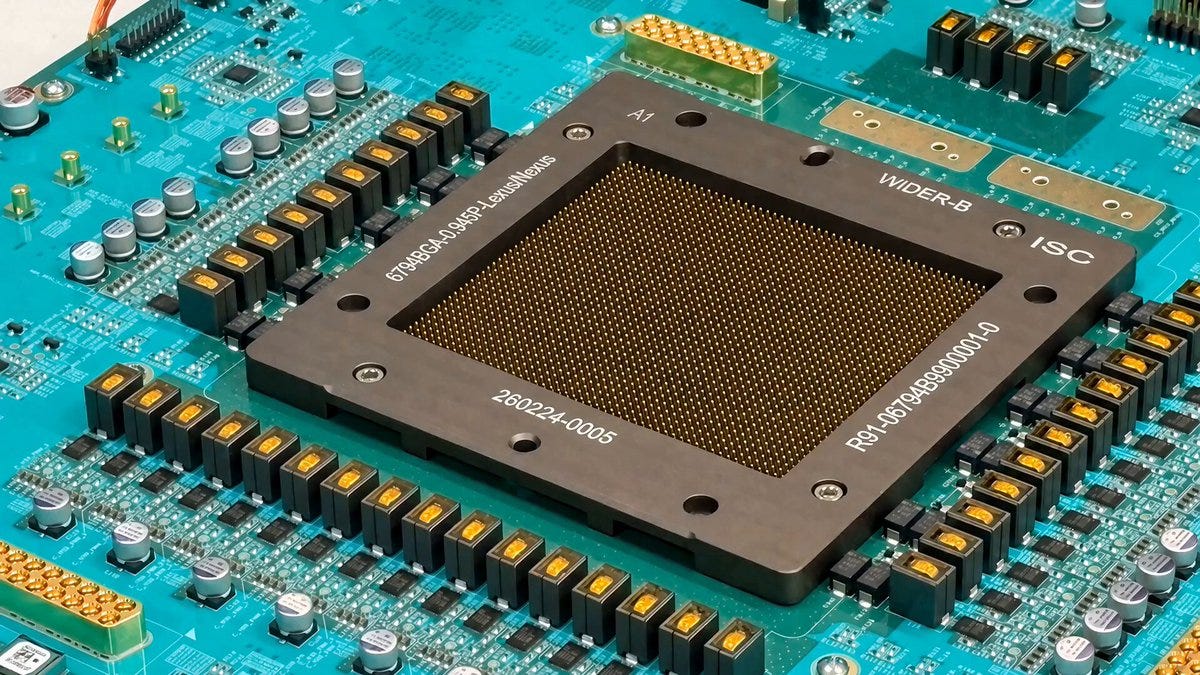
NVIDIA Groq 3 LPX is an AI inference accelerator designed for the Vera Rubin platform, enabling ultrafast interactivity with long context windows.
From NVIDIA technical blog
LLMs1 min read
NVIDIA introduces DSX MaxLPS to improve AI factory performance per watt, addressing power constraints in industrial AI systems.
From NVIDIA technical blog
LLMs1 min read
The article discusses methods for organizations to size GPUs effectively for AI inference, balancing performance and total cost of ownership without overspending.
From NVIDIA technical blog
Agents1 min read
OpenAI terminated its partnership with Cursor following SpaceX’s acquisition, citing contract violations. This shift impacts Cursor’s access to OpenAI models and reflects broader competition within the AI landscape, particularly with Claude and Grok.
From Latent Space
LLMs1 min read
NVIDIA TensorRT Model Connect allows engineers to deploy open AI models from checkpoint to inference using just two commands. This simplifies the deployment process and reduces the need for model-specific conversions.
From NVIDIA technical blog
Agents2 min read
OpenAI’s Jalapeño inference chip delivers significantly improved performance and lower latency compared to NVIDIA GB200/GB300 systems, marking a shift in inference economics and highlighting the importance of system-level optimization.
From Latent Space
LLMs1 min read
NVIDIA NVLink Fusion expands NVHBM capabilities, allowing for increased bandwidth and reduced latency between GPUs. This facilitates the execution of larger AI models and complex reasoning workloads within next-generation AI infrastructure.
From NVIDIA technical blog
Agents2 min read
LangChain and NVIDIA introduced the NemoClaw blueprint, combining Nemotron 3 Ultra, LangChain Deep Agents Code, and NVIDIA OpenShell runtime. This open system enables enterprises to optimize agent performance, reduce inference costs, and control agent deployments for improved governance and efficiency.
From LangChain blog
LLMs1 min read
NVIDIA Dynamo introduces Shadow Engine Recovery, allowing LLM inference engine processes to recover in seconds instead of minutes. This reduces downtime and improves operational efficiency for production deployments.
From NVIDIA technical blog
LLMs1 min read
A new 4-bit model, dubbed Quantization-Aware Healing, achieves performance comparable to its full-precision original. This technique offers a compressed model size with minimal impact on accuracy for running AI agents.
From Hugging Face blog
LLMs1 min read
Alibaba has released the open weights for Qwen3.8-2.4T-A95B, a 2.4 trillion parameter model, allowing near-frontier capabilities to be deployed on NVIDIA GB300 NVL72 systems. This enables engineers to run large language models with configurable reasoning.
From NVIDIA technical blog
LLMs1 min read
NVIDIA's Vera Rubin and Blackwell architectures demonstrate significantly improved performance per watt for agentic AI workflows, including multi-step reasoning and tool invocation. This advancement enables more complex and efficient AI agent deployments in diverse applications.
From NVIDIA technical blog
Research2 min read
Google Research introduces Mobility-Embedded POIs (ME-POIs), a framework that integrates mobility patterns with language models to improve predictions about place attributes like operating hours and busyness. This approach addresses data sparsity and enhances model accuracy.
From Google Research blog
LLMs1 min read
Hugging Face Inference Endpoints, Jobs, and Buckets are used to power the search functionality within Papers with Code. This infrastructure enables rapid model deployment and efficient execution of complex reasoning tasks.
From Hugging Face blog
LLMs1 min read
LiquidAI’s LFM2.5-DSpark model demonstrates up to 3.2x faster inference speeds compared to previous models. This improvement is achieved through optimized execution on DSpark hardware.
From Hugging Face blog
LLMs1 min read
Sentence Transformers has released new multi-vector embedding models designed for late interaction. These models offer improved performance for tasks requiring understanding of context and relationships between multiple pieces of information.
From Hugging Face blog
LLMs1 min read
Dharma AI achieved a 33 point increase in GPU utilization by changing the order of model execution within a single cluster. This demonstrates the impact of efficient model sequencing on resource efficiency.
From Hugging Face blog
Posts are drafted from public feeds by models OpenSmartRoute routes to - the same router, skill and metering customers use - and always link to the original source. Corrections: support.
Archive (33)