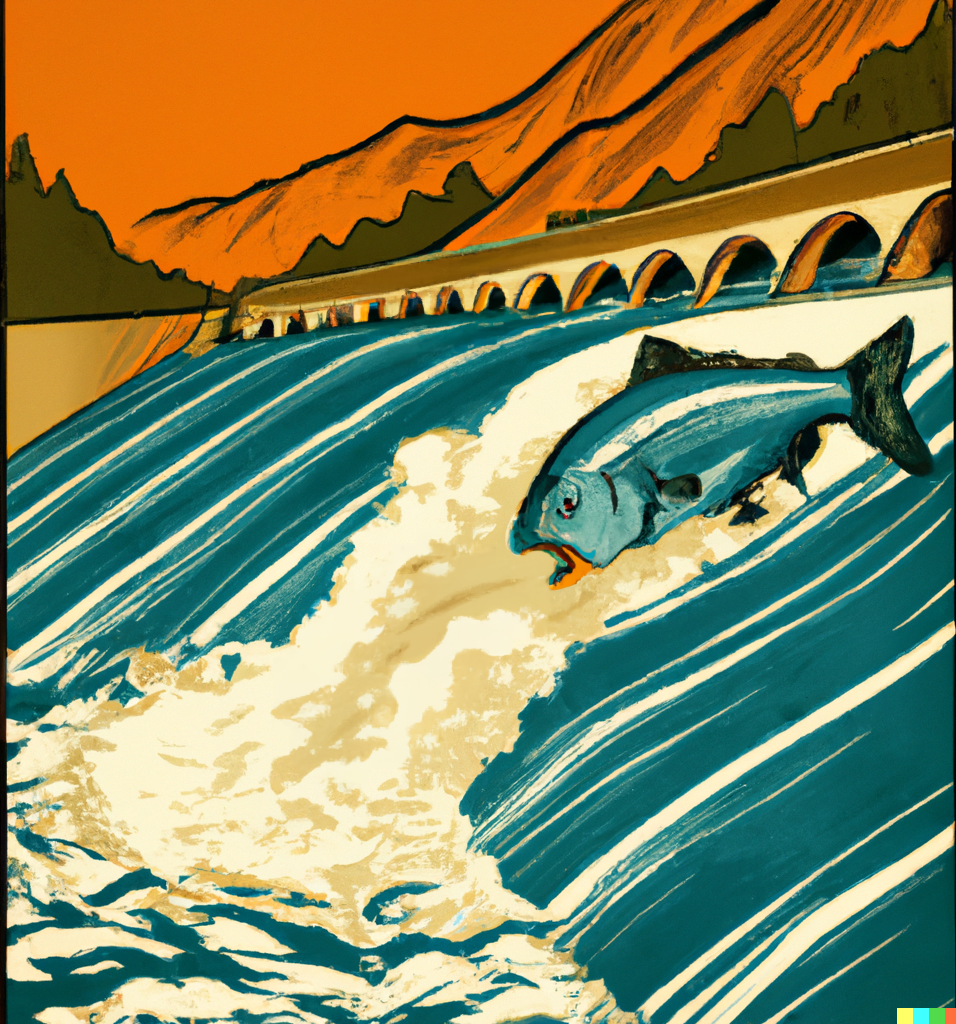
Large hydroelectric dams in the United States must comply with Federal Energy Regulatory Commission (FERC) regulations regarding their impact on fish populations. To obtain operating licenses, dam operators must submit detailed plans demonstrating that their facilities do not negatively affect the environment or endangered species.
Compliance is demonstrated through routine fish passage studies, which rely on a primary dataset: a fish count. Fish are counted as they pass through structures like ladders, with observers recording species, injury status, and origin (hatchery vs. wild).
Visual counting is conducted by trained personnel in remote locations under challenging conditions such as poor lighting and unregulated temperatures. The task requires expertise to identify subtle physical characteristics like clipped fins or scratches visible only briefly.
Data collection methods vary significantly across operators regarding granularity and seasonality. Some collect counts hourly, others daily or monthly, and some only during specific migration runs. These inconsistencies complicate the correlation of data with operational information to assess adverse effects on fish populations.