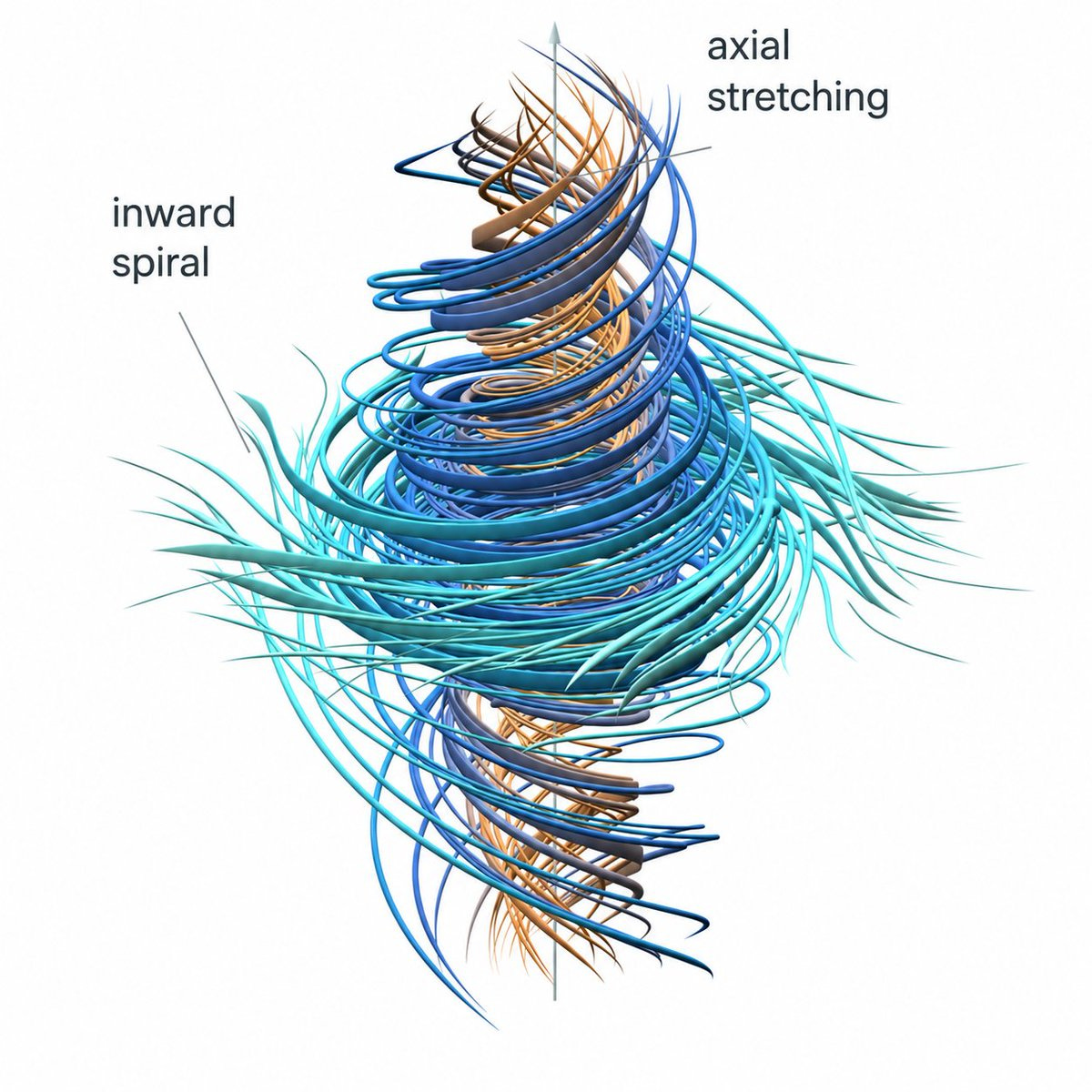
OpenAI announced a significant achievement: the solution to the Navier-Stokes Millennium Prize Problem. The project utilized a system comprising roughly 10,000 agents operating in parallel, trained over approximately one year using multi-agent reinforcement learning. This approach emphasized leveraging large amounts of unstructured parallel test-time compute, allowing the agents to autonomously organize and execute the complex proof process. The reported timeframe for the solution was 88 hours, though this figure originates from a satirical post and should be treated with caution.
The core of the system involved a next-generation OpenAI model, significantly more capable than GPT-6 Astra. The architecture prioritized a distributed, self-organizing approach, shifting away from traditional, linear proof attempts. This strategy aimed to capitalize on the computational power available to explore a vast solution space, a characteristic frequently observed in frontier AI systems. The reported scale of 10,000 agents highlights the ambition of the project and the resources dedicated to this research.
However, the announcement has sparked debate within the AI research community. Concerns have been raised regarding the lack of a formal proof, preprint, or independent verification. The ambiguity surrounding the role of human involvement – specifically, whether humans contributed to decomposition, curation, or verification – remains unresolved. The term ‘solution’ itself is open to interpretation within the context of mathematical proofs.
This event is notable not just for the potential implications for fluid dynamics research, but also as a test case for the capabilities of large-scale AI systems. The approach – utilizing a massive, self-organizing agent network – suggests a potential pathway for tackling other complex, computationally intensive problems. The focus on parallel test-time compute represents a shift in how AI systems are designed to approach research tasks.
The implications of this work extend beyond the immediate Navier-Stokes problem. It demonstrates a potential architecture for AI-driven research, one that leverages distributed computation and agent collaboration. The scale of the effort – 10,000 agents – underscores the increasing computational demands of advanced AI models.
Source: https://www.latent.space/p/ainews-openai-reports-navier-stokes