Language model performance in a controlled benchmark environment often doesn’t translate directly to production. The challenges stem from real-world inputs being ambiguous, labels inconsistent, and context incomplete. A system’s success needs to be defined by its impact on a specific product decision, not just by raw metric scores.
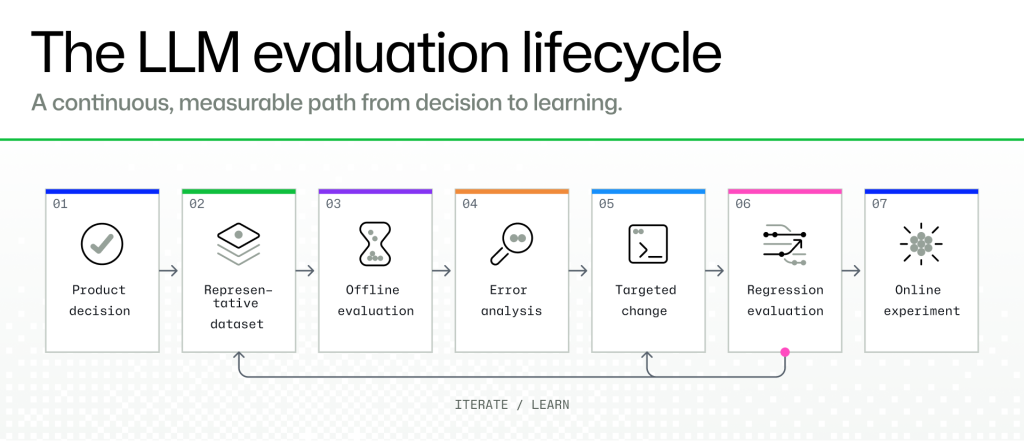
When evaluating LLM-based systems, teams should start with the product decision they are trying to support. For example, in a GitHub secret scanning application, the primary goal wasn’t simply to accurately classify strings but to reduce false positives while maintaining sufficient recall to prevent security vulnerabilities. This required prioritizing precision and using recall as a safety constraint, ensuring any reduction in false positives remained within acceptable limits.
Evaluation should be treated like integration testing. Given the dynamic nature of LLM systems – prompt revisions, model upgrades, and changes to input construction – a one-time evaluation is insufficient. Teams must continuously rerun the evaluation whenever a meaningful change is made, meticulously documenting the prompt, model, dataset version, and system configuration. This ensures repeatability and allows for accurate comparison against a baseline.
To avoid misattributing improvements, experiments should isolate variables. Teams should change only one key factor at a time, such as a prompt revision or a model upgrade, and compare the results against a known baseline. This approach helps determine whether a change genuinely improved performance or introduced a regression. The goal is to generate evidence that supports a product decision, not simply to optimize a metric.
Ultimately, a robust evaluation process involves defining clear success criteria, establishing operational guardrails, and employing a disciplined, repeatable experimentation framework. This approach helps ensure that LLM-powered systems deliver tangible value in production environments.
Source: https://github.blog/ai-and-ml/llms/how-to-evaluate-llms-before-production/