Scaling Limitations in Physical Modeling
Anima Anandkumar’s work highlights a significant difference in the approach to modeling language versus the physical world. Current foundation models, largely based on transformer architectures, rely on vast quantities of text data. However, modeling complex physical systems – such as weather patterns or fusion reactors – demands significantly more data and computational resources. The sheer scale of these systems, coupled with the need for high-resolution simulations, creates a bottleneck that traditional scaling methods struggle to overcome.
Neural Operators as a Solution
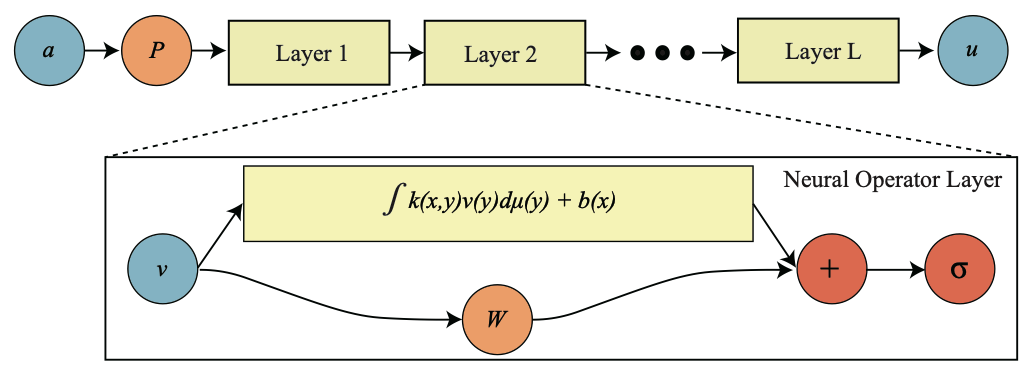
To address these challenges, Anima pioneered the use of Neural Operators. This technique allows for the combination of data and physical laws, enabling multi-scale inputs and outputs. Instead of modeling a traditional grid, the system learns a function that evolves over multiple scales. This approach circumvents the limitations of simply increasing the number of tokens, which is insufficient for the complexity of physical systems.
Leveraging Physical Priors
Key to the success of Neural Operators is the incorporation of physical priors – the inherent structure and relationships within the physical world. For example, in weather forecasting, the spherical geometry of the Earth is leveraged through spherical harmonics. This reduces the computational burden and improves the stability of the model, allowing for predictions far into the future. This contrasts with the approach of simply throwing more data at a transformer network.
Formal Verification and Future Directions
Beyond weather modeling, Neural Operators are being explored in other domains, such as fusion reactors, where they can predict plasma disruptions with remarkable speed and accuracy. Anima’s work extends to integrating neural networks with automated proof techniques, exemplified by TorchLean, which allows for formal verification of neural networks. This has implications for applications like control loops in fusion reactors. The focus remains on building a ‘foundation model for physics’ by integrating structure and inductive biases, rather than solely relying on data scaling.
Source: https://www.latent.space/p/anima